- Concept
- Version · 6.0
- Monitor
Understand policy outcomes
Last updated: September 29, 2026
How severity and exit codes turn check results into pipeline decisions.
Policy results are not just pass and fail. Each check carries a configured severity, and the severity maps to an exit code. The exit code decides whether a pipeline warns and continues or stops the change. Reading an outcome means reading both what the check found and what its severity told the pipeline to do about it.
Status and severity are different signals
The operation status reflects Liquibase's exit code, not a violation tally. In practice, higher-severity violations, such as those configured as blockers, cause checks run to fail, which can block a CI/CD pipeline from proceeding. Lower-severity violations may result in a warning or still allow the command to succeed. The exact behavior depends on your Liquibase checks configuration.
Outcomes on the details page
Each run's Outcome Breakdown card shows how many violations were found at each severity. Below the pills, a caption gives the totals, such as 25 checks evaluated · 4 violations, or no violations for a clean run.
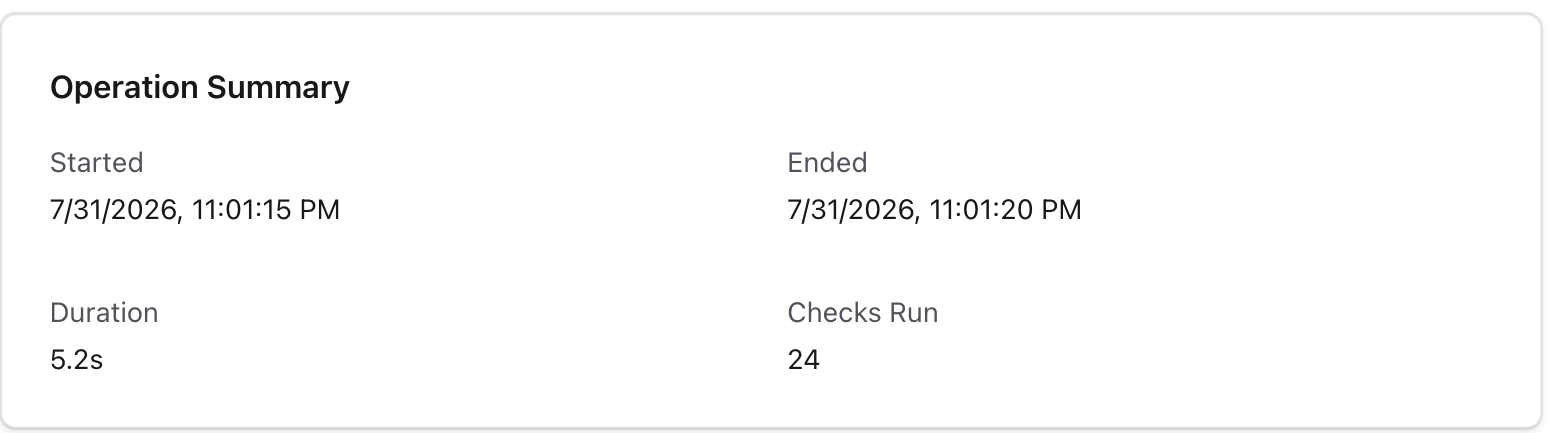
Severity and exit-code behavior is configured under Govern database changes. The result views show the outcome each run produced. Field-level detail is in What are policy check results?.