- Task
- Version · 6.0
- Govern
Verify the effect on the next measurement cycle
Last updated: September 29, 2026
Check whether the measure moved, in the direction you expected and for the reason you expected.
Before you begin
You recorded what you expected to be different when you made the change. Without it, there is nothing to check the result against.
A full measurement cycle has passed since the change took effect.
Procedure
Recall the expectation you recorded
Every change made in the cycle came with an expectation: Fewer violations of a specific check, a lower change failure rate, a first-time-pass rate on a team’s changes. Start from that, not from whichever figure happens to look interesting today.
Read the same measure at the same scope
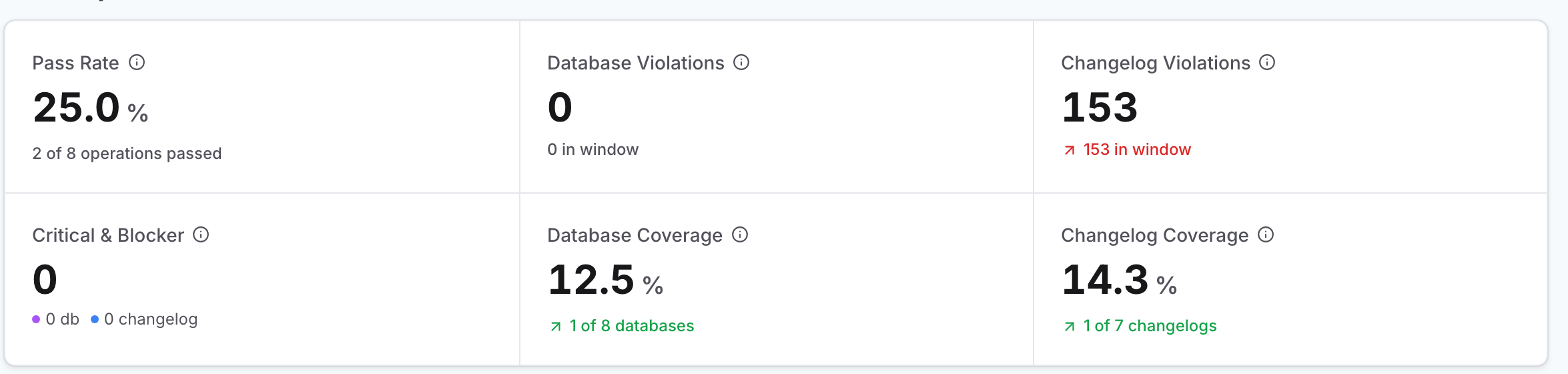
Open the dashboard the expectation was written against and set the same time range and the same filters you used before the change. A saved view is the reliable way to return to an identical scope. See Track improvement over time for how the period comparison on each tile reads.
Decide what the result means
The measure moved as expected: Keep the change, tell the affected teams what worked, and pick the next constraint.
The measure did not move: The constraint was misidentified, which is information too. Return to Identify the constraint: Policy, practice, or pipeline with what you now know.
The measure moved the wrong way: Revert as deliberately as you made the change, with the same communication, and record why. A reverted change that taught you the real constraint is a cheap lesson.
Time the judgment
Verify one cycle at a time. A change judged too early looks like noise, and one judged too late has been contaminated by everything that has changed since.